It’s 2026, and I’m still just as fascinated by the world of gacha games as I was a few years ago. The conversation around them hasn’t changed much—they’re expensive, they’re designed to be addictive, and they print money. But what always gets me is how certain titles, some old, some new, manage to not just survive but absolutely thrive in this incredibly competitive space. It’s a world built on FOMO (fear of missing out) and the thrill of the pull, and as a player, I’ve felt that tug on my own wallet more times than I’d like to admit. The games that succeed aren’t just about flashy animations; they build worlds, stories, and communities that make players want to invest, both their time and their money.
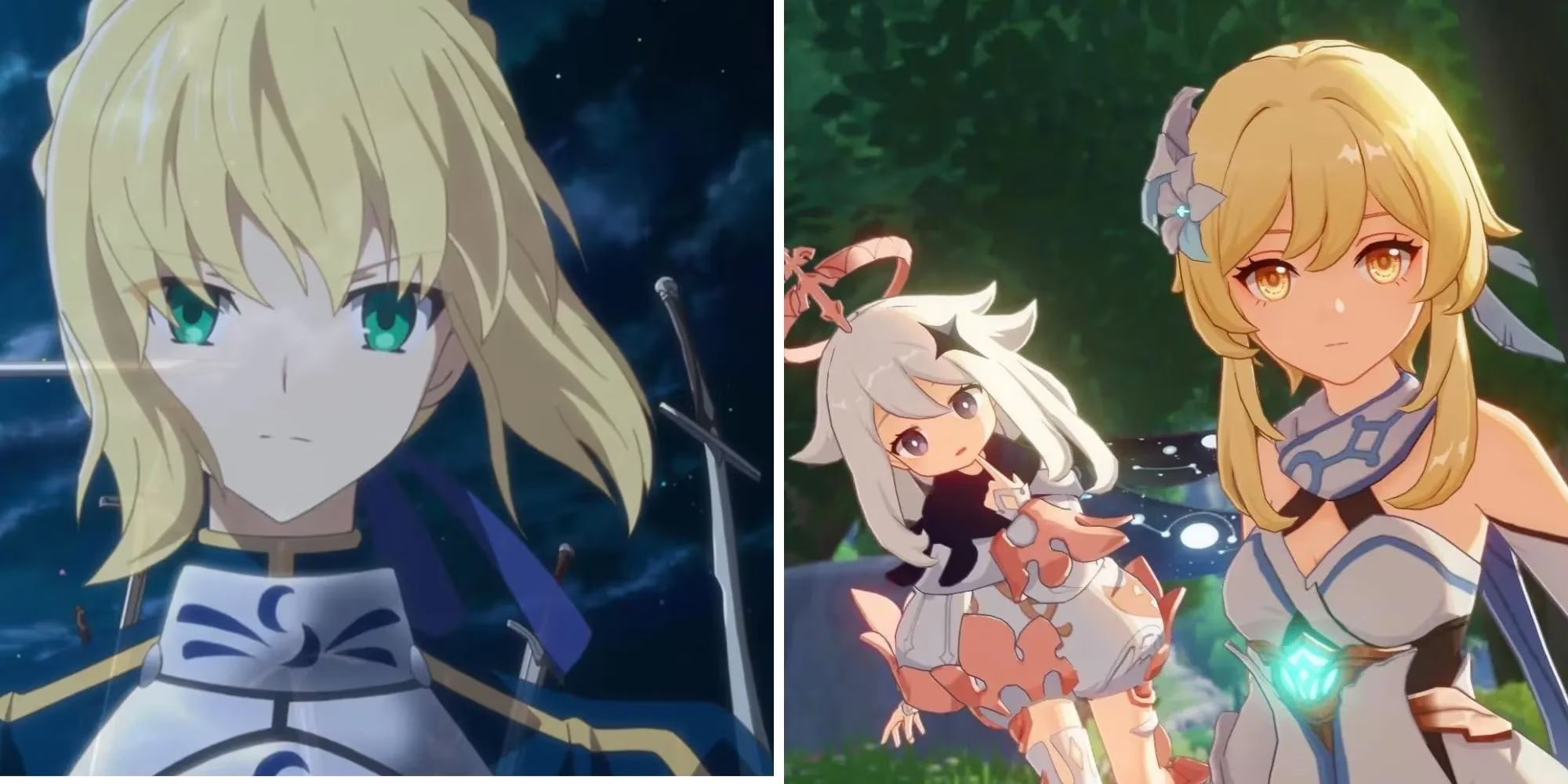
Let’s start with the titans, the games that have defined the genre for years. Fate/Grand Order (FGO) still sits comfortably at the top of the earnings mountain, a position it seems unwilling to relinquish. When I think about mobile fantasy sci-fi with turn-based combat, FGO is the blueprint. Its genius was intertwining a massive, beloved anime franchise with a compelling gacha system. You’re not just pulling for a strong servant; you’re pulling for a piece of the Fate lore you love. The story of Ritsuka Fujimaru’s time-traveling quest to save humanity has legs, and the developers have masterfully kept it relevant with new chapters and events. It proves that a strong narrative foundation can sustain a game for nearly a decade and counting.
Right behind it, and arguably the game that brought gacha mechanics to a truly global mainstream audience, is Genshin Impact. HoYoverse’s open-world phenomenon redefined what a free-to-play game could be. I remember its launch in 2020 and how it felt like a revelation. The pity system, while often criticized, became the industry standard everyone measured others against. What keeps Genshin on top isn’t just the gacha; it’s the constant stream of high-quality content—new regions, characters with intricate backstories, and events that feel substantial. The Spiral Abyss remains that ever-present endgame goal that pushes players to optimize their teams, driving banner pulls. Its success paved the way for its sibling…
Honkai: Star Rail. If Genshin opened the door, Star Rail marched right in and set up shop. Released in 2023, its success was almost a foregone conclusion given HoYoverse’s track record. But its genius was in leaning into a classic, polished turn-based combat system. For players like me who enjoy strategic, menu-based battles over real-time action, it was a perfect fit. The marketing was everywhere (yes, even those bizarre Tiktok ads), and it worked. It brilliantly connects the HoYoverse multiverse, rewarding long-time fans with lore nuggets while being completely accessible to newcomers. Its revenue, skyrocketing past many older titles, showed the power of a trusted developer brand and a well-executed core loop.
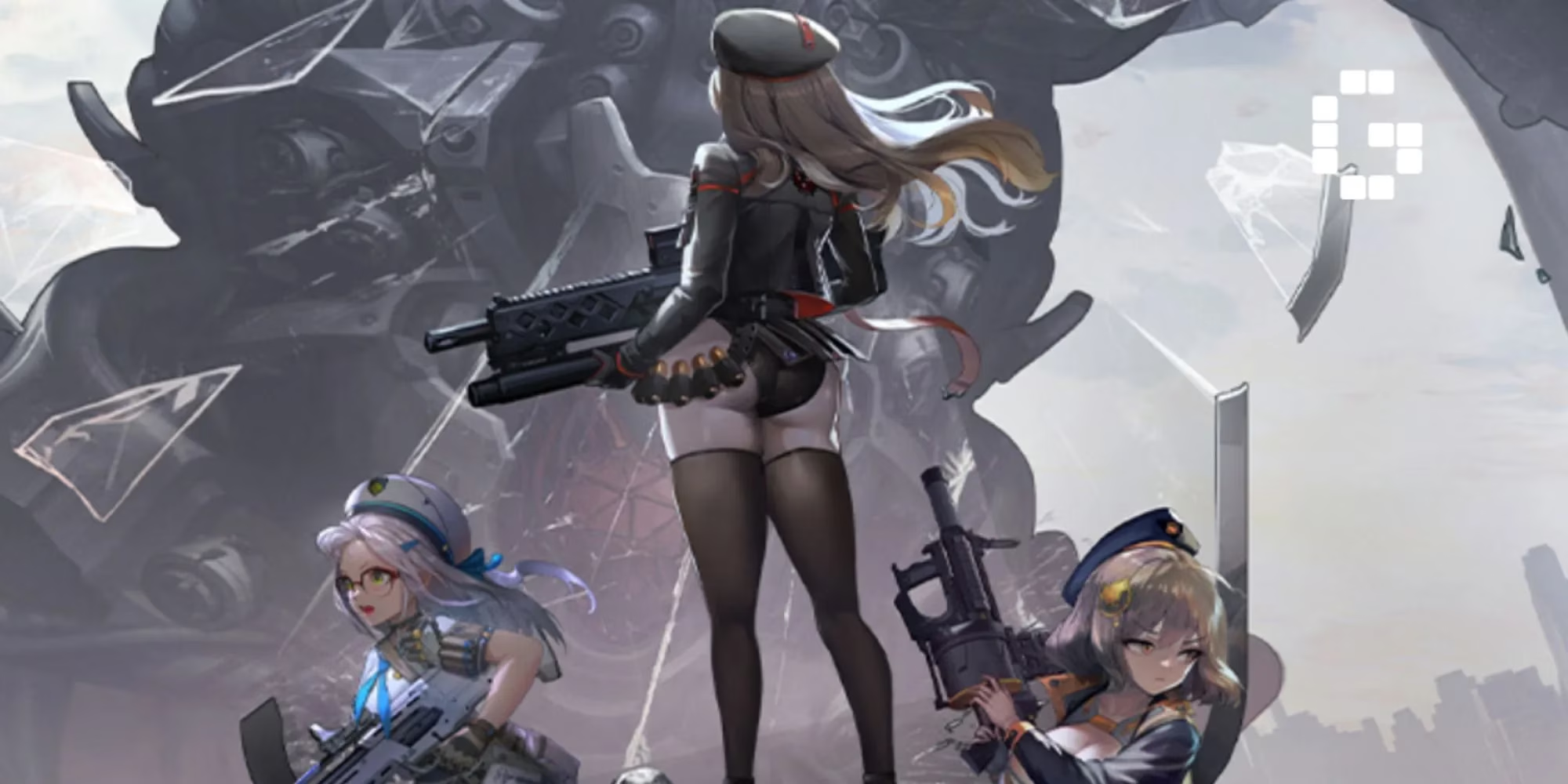
The landscape isn’t just dominated by these giants, though. Newer games have carved out massive niches. Take Goddess of Victory: Nikke. Launching in 2022 with a… distinctive visual style and a shooter mechanic, it captured attention immediately. It tapped into that Nier:Automata aesthetic of androids in a post-apocalyptic world, and the gameplay was surprisingly solid. Streamers played it, memes were made, and it quickly became a revenue powerhouse. It’s a great example of a game knowing its audience and delivering a specific, polished experience.
Then there are the genre specialists. Uma Musume is a phenomenon almost entirely contained within Japan, but what a phenomenon it is. A game about raising horse-girls who also perform as idols? It sounds absurd, but its execution is so charming and its systems so deep that it prints money. It shows that cultural specificity and a unique, confident concept can lead to staggering success. Similarly, Blue Archive, with its deceptively cute school setting that hides darker narrative depths, has cultivated a fiercely loyal fanbase that has propelled it to massive earnings since its 2021 launch.

We can’t forget the veterans. Summoners War: Sky Arena, released back in 2014, is a testament to long-term support and community building. In a market where games can disappear in a year, maintaining relevance for over a decade is a monumental achievement. It set the standard for monster-collection RPGs on mobile. Arknights (2019) deserves a special mention for being notably free-to-play friendly. You can tackle most of its challenging tower-defense gameplay without needing the highest rarity operators, which actually makes me want to support the developers because I don’t feel forced to pay. It’s a lesson in player goodwill.
And then there’s Diablo Immortal. Love it or hate it (and many hated its aggressive monetization at launch), its financial success is undeniable. It brought a legendary PC ARPG franchise to mobile with full-blown gacha mechanics embedded into its core PvP progression. The criticism was loud, but the revenue spoke louder, proving there’s a massive audience for high-production, familiar IPs on mobile, regardless of the monetization model.
So, what’s the secret sauce in 2026? Looking at these top earners, a few patterns emerge:
-
IP & World-Building: A strong existing franchise (Fate, Dragon Ball, Diablo) or an incredibly well-built original world (Genshin, Honkai, Arknights) is crucial. Players invest in worlds they care about.
-
Sustainable Gameplay Loop: The core gameplay—whether it’s turn-based combat, open-world exploration, or tower defense—has to be fun and deep enough to play for years.
-
Community & Culture: Games like Uma Musume and Blue Archive thrive on dedicated communities that create fan art, memes, and guides. This organic growth is priceless.
-
Constant Evolution: None of these games are static. They regularly introduce new characters, stories, events, and sometimes even new gameplay modes to keep the experience fresh.
As a player navigating this expensive, thrilling, and sometimes frustrating landscape, I’ve learned to pick my battles. I might save for months in Genshin Impact for one specific character, enjoy the story of FGO without spending a dime, or dabble in the strategic puzzles of Arknights. The gacha model is here to stay, but the games that rise to the top and stay there are the ones that offer more than just a slot machine—they offer a world worth returning to, pull after pull. The journey, it seems, is still the real prize, even if the destination is a shiny new 5-star character.